Metronome Subdivisions: What They Are in Music
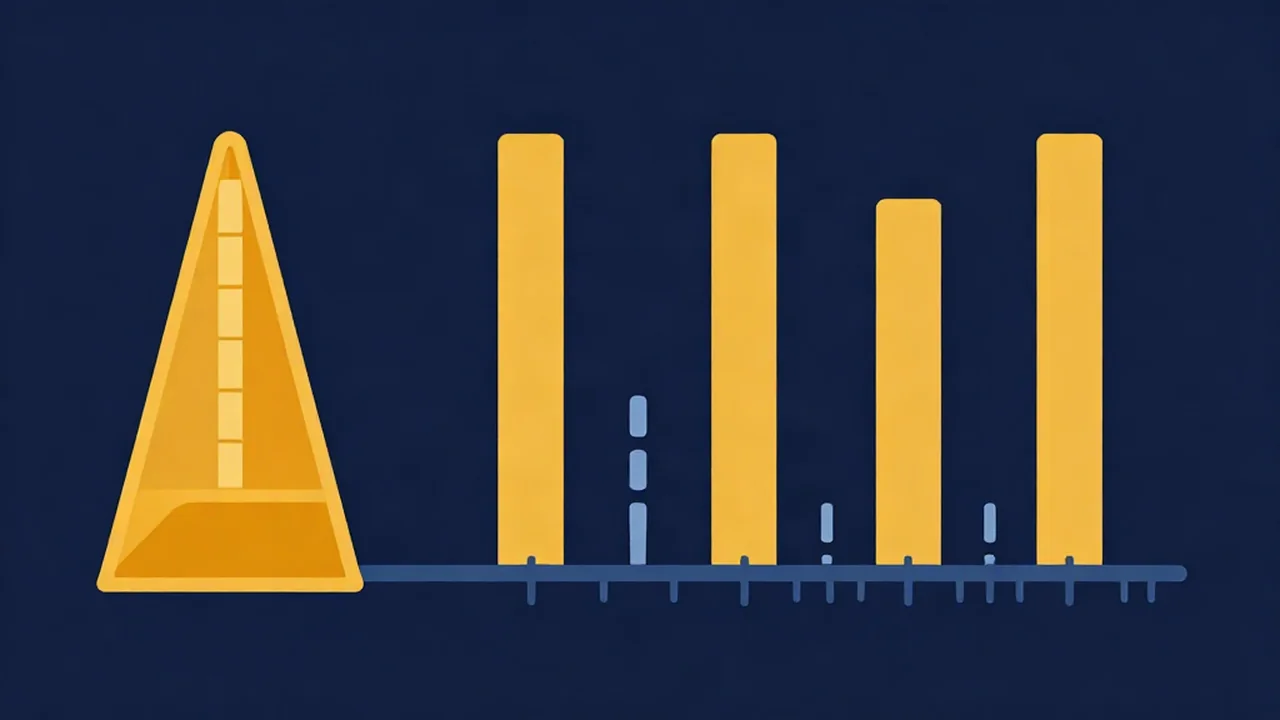
A subdivision in music is a beat split into smaller, equal parts, and a metronome with subdivisions, like the free online Metronome, plays a softer click on each of those parts between the main beats. Split a beat in two and you get eighth notes. Split it in three and you get triplets. Split it in four and you get sixteenth notes.
The beat is the pulse you tap your foot to. Subdivisions are the evenly spaced points inside it, and hearing them is what keeps your timing honest when the beats are far apart.
The common subdivisions
These three subdivisions, plus plain quarter notes for comparison, cover almost everything you'll practice. The table assumes 4/4 time with the quarter note as the beat, which is the most common setup.
| Subdivision | Notes per beat | How to count one beat | Two beats in a row |
|---|---|---|---|
| Quarter notes (no subdivision) | 1 | "1" | "1, 2" |
| Eighth notes | 2 | "1-and" | "1-and, 2-and" |
| Eighth-note triplets | 3 | "1-trip-let" | "1-trip-let, 2-trip-let" |
| Sixteenth notes | 4 | "1-e-and-a" | "1-e-and-a, 2-e-and-a" |
Eighths and sixteenths are duple subdivisions: they split the beat into two or four. Triplets are a triple subdivision: three equal notes squeezed into the space of one beat. That difference is easy to hear. Eighths feel straight and even, like a march. Triplets feel rounder and rolling, because no note lands exactly halfway through the beat.
The count syllables are worth learning. Saying "1-e-and-a" out loud gives every sixteenth its own name, so you always know where you are inside the beat, not just which beat you're on.
Why subdividing helps at slow tempos
Slow practice sounds easy, but timing slips there too. At 60 beats per minute there is a full second between clicks. That's a long time to hold a steady pulse in your head with nothing to check against, so most players either rush toward the next click or drift late and drag.
A subdividing metronome fills that gap. With eighths on at 60 BPM you hear a click every half second, and with sixteenths every quarter of a second. Each inner click is a checkpoint: if your note lands before it, you're rushing, and if it lands after, you're dragging. You find out within the beat instead of a bar later.
Subdivisions also tell you how fast your hands actually have to move. The math is simple:
notes per second = BPM × notes per beat ÷ 60
So sixteenth notes at 90 BPM are 90 × 4 ÷ 60 = 6 notes per second. Eighths at the same tempo are 3 per second, and triplets are 4.5. A passage that looks slow on paper because the BPM is low can still be fast work if it's written in sixteenths. If you want to understand the BPM side of that equation, see What Is BPM? Tempo Explained + BPM Finder.
How a subdividing metronome sounds
On the Vocal Cut Metronome, the Subdivision setting has four chips: Quarter, Eighths, Triplets and Sixteenths. Quarter means no subdivision, just the main beats.
Pick any of the others and the metronome adds extra clicks between beats. Those subdivision clicks are softer and lower-pitched than the main beat click, so the beat still stands out and the subdivisions sit underneath it. If Accent the first beat is ticked (it is by default), beat one of each bar is higher again, which gives you three layers: bar, beat and subdivision.
A few other details worth knowing:
- The beat lights show the main beats only, not the subdivisions.
- Subdivisions split whatever the click represents. In 4/4 that's usually the quarter note, but if you treat each click as a half note or a dotted quarter, the subdivisions split that instead.
- You can change the subdivision, tempo (20–300 BPM), beats per bar (1–12), accent and volume while it's playing, so you can switch from eighths to triplets without stopping.
- Tap tempo sets the BPM from your taps if you want to match a song.
It's a free online metronome with subdivisions that runs in your browser, with no install and no account. It generates its own click and never asks for the microphone. For a full walkthrough of every control, see How to Use a Metronome (Beginner Guide).
Subdivisions vs time signatures
The two are easy to confuse, but they answer different questions.
- A subdivision is how you split each beat.
- A time signature is how beats group into bars: how many beats per bar, and which note value counts as one beat.
You can play any subdivision in any time signature. A 3/4 waltz can be counted in eighths ("1-and, 2-and, 3-and") just as easily as a 4/4 rock song.
Where they meet is compound meter. In 6/8, 9/8 and 12/8, the beat is a dotted quarter note (a quarter note plus half its length, which equals three eighth notes), and it naturally divides into three eighth notes. So 6/8 is two beats per bar, each felt as a group of three: ONE-two-three FOUR-five-six. That's why one way to set 6/8 on the metronome is 2 beats per bar with the Triplets subdivision, with the BPM set to the dotted-quarter pulse. The full explanation is in Time Signatures Explained (4/4, 3/4, 6/8).
Practice: switching subdivisions
This short drill trains you to feel the beat split different ways without losing the pulse.
- Set a slow tempo, around 60 BPM, with 4 beats per bar and Quarter selected.
- Count aloud "1, 2, 3, 4" for a couple of bars, landing on each click.
- Switch to Eighths while it plays and count "1-and, 2-and" for four bars.
- Switch to Triplets and count "1-trip-let" for four bars. Keep the main beat exactly where it was; only the inside changes.
- Switch to Sixteenths and count "1-e-and-a." If the syllables blur, drop the tempo by 10 BPM or so before you try again.
- Cycle back down to Quarter and see if you can still feel the subdivisions without hearing them.
Clap or play a single note on each subdivision once counting feels easy. When you're ready to push the tempo, How to Build Speed With a Metronome covers how to raise it in small steps. Drummers can apply the same idea to sticking patterns in How to Practice Drums With a Metronome.
New to the device itself? What Is a Metronome? Definition and Meaning covers the basics, and the Audio Explainers hub collects more rhythm and tempo terms.
Frequently asked questions
What is a metronome with subdivisions? A metronome with subdivisions plays extra, quieter clicks between the main beats, splitting each beat into equal parts such as eighth notes, triplets or sixteenth notes. The extra clicks give you reference points inside each beat, which makes it easier to notice rushing or dragging, especially at slow tempos where the main clicks are far apart.
What's the difference between eighth notes and triplets? Eighth notes split a beat into two equal parts, counted "1-and." Eighth-note triplets split the same beat into three equal parts, counted "1-trip-let." Eighths sound straight and even, while triplets sound rounder and rolling because no note falls exactly halfway through the beat.
How do you count sixteenth notes? Sixteenth notes split each beat into four equal parts, counted "1-e-and-a, 2-e-and-a" and so on. The number lands on the beat, the "and" lands exactly halfway through it, and the "e" and "a" fill the gaps on either side. Practice slowly with a metronome set to sixteenths until each syllable lines up with a click.
Should beginners use subdivisions on a metronome? Yes, especially at slow tempos. When the clicks are a second or more apart, it's hard to keep a steady pulse, and eighth-note subdivisions give you a checkpoint halfway through every beat. Start with eighths, then try triplets and sixteenths once counting them aloud feels comfortable.
Is the Vocal Cut online metronome with subdivisions free? Yes. The Vocal Cut Metronome is free, runs in your browser with no install or account, and offers Quarter, Eighths, Triplets and Sixteenths subdivisions. It generates its own click on your device, so it never asks for microphone access and there is no file to upload.