What Are Formants? A Pitch Changer Guide
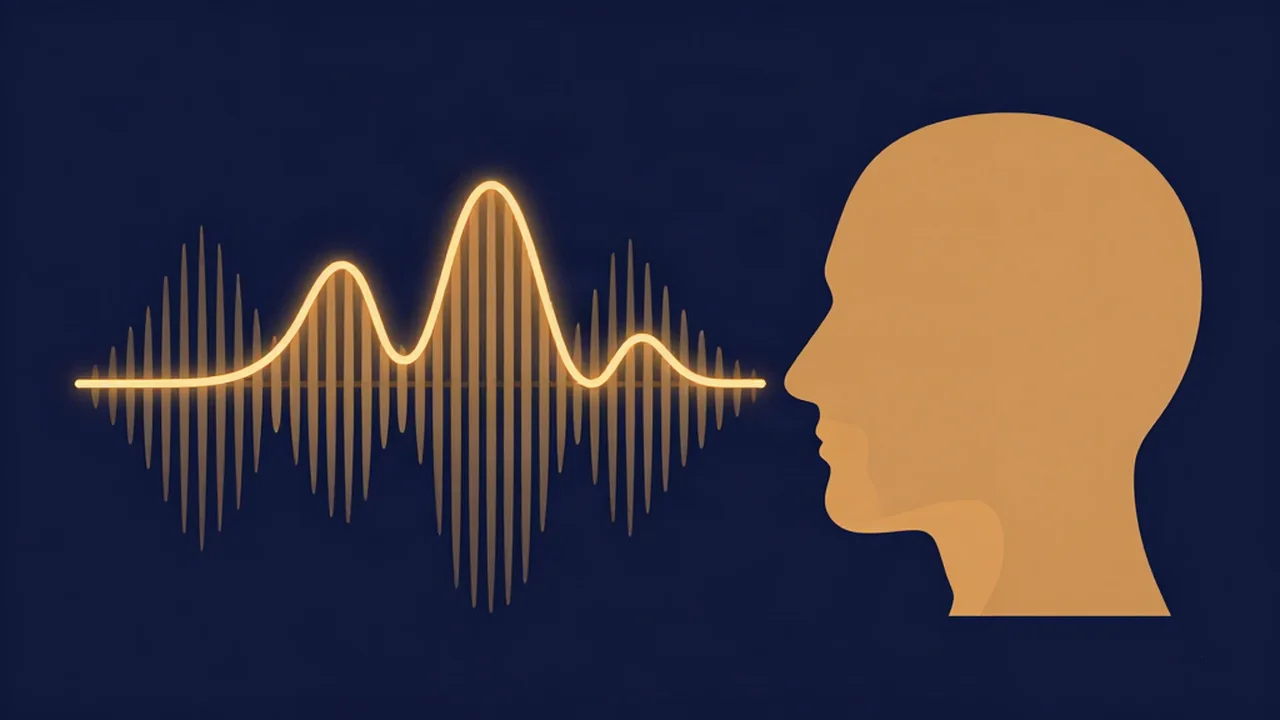
If you've ever pushed a vocal up a few semitones in a Pitch Changer and heard a chipmunk come back, you've heard formants being moved. Formants are the resonant peaks of the vocal tract, the throat, mouth, and nasal cavity, and they stay roughly fixed for a given speaker and vowel no matter which note is being sung. They're a big part of why your voice sounds like you. Instruments have them too: a violin or guitar body resonates at its own fixed frequencies.
Pitch, harmonics, and formants are three different things
A sung or spoken note has a fundamental frequency, the pitch you hear. On top of it sit harmonics at whole-number multiples: sing A3 at 220 Hz and you also produce energy at 440, 660, 880 Hz, and so on.
Formants are not more harmonics. Picture the vocal tract as a filter the harmonics pass through. Some frequency regions get boosted and others get damped. If you draw a smooth line over the tops of all the harmonics, that curve is the spectral envelope, and its peaks are the formants. Change the note and the harmonics slide along under the envelope, but the envelope itself stays put as long as the mouth shape does.
Pitch comes from the vocal folds; formants come from the space above them.
How F1 and F2 shape vowels
Formants are numbered from the lowest up: F1, F2, F3, and so on. The first two do most of the work of telling vowels apart.
- F1 tracks how open the mouth and jaw are. An open vowel like "ah" has a high F1; a closed vowel like "ee" or "oo" has a low one.
- F2 tracks where the tongue sits front to back. "Ee" has a high F2; "oo" has a low one.
For adult voices, F1 usually falls somewhere around 250–900 Hz and F2 around 800–2,500 Hz, with children and many women sitting higher because their vocal tracts are shorter. These are rough ranges that vary by speaker, accent, and language.
Formants overlap with, but differ from, the EQ "presence" region you boost to help a vocal cut through a mix; How to EQ a Vocal in Your Browser covers that.
Why a vocal pitch changer creates chipmunks and giants
The simplest way to raise pitch is to play audio back faster, like a sped-up tape. That moves the fundamental and the harmonics up, but it also moves the whole spectral envelope up by the same ratio. The formants rise as if the singer's vocal tract had physically shrunk.
Our ears read high formants as "small person." So a voice raised four or five semitones can start to sound cartoonish. Lower it the same way and the formants drop, which reads as a giant or a slowed-down monster. A real soprano hits high notes without that effect, because singing higher doesn't shrink her throat and mouth.
Formant preservation and formant shifting
Pitch-shifting software can treat pitch and formants separately.
- Formant preservation (sometimes called formant correction) estimates the spectral envelope, shifts the harmonics, and then re-applies the original envelope. The singer moves to a new note but keeps their natural vowel color and size.
- Formant shifting does the reverse on purpose: it moves the envelope while leaving pitch alone, or by a different amount. Producers use it to make a voice sound younger, larger, or strange.
What Vocal Cut's audio pitch changer does
Vocal Cut's Pitch Changer works in semitones from −12 to +12 and has a separate speed control. When you export, it resamples the audio in the tape or turntable style, so pitch and playback speed move together, and it does not preserve formants. Push a vocal up several semitones and you'll get the chipmunk effect. For vocals, keep shifts to a semitone or two. Semitones and Cents: A Pitch Changer Guide explains the units, and How Pitch, Speed, and Duration Relate explains why they're linked.
If you need to change key without changing tempo, the Karaoke Maker has a time-preserving key shift. It isn't formant-preserving either, so the same advice about small vocal shifts applies. How to Pitch Shift Without Ruining Vocals goes into the limits.
Both tools run in your browser, and your audio never leaves your device. For more definitions, see the Audio Explainers hub.
Frequently asked questions
What is a formant in simple terms?
A formant is a resonant peak in the spectrum of a voice or instrument, created by the shape of the space the sound passes through. They make vowels recognizable and give each voice its own character.
Are formants the same as harmonics?
No. Harmonics are frequencies the vocal folds produce at multiples of the pitch. Formants are regions of the spectrum the vocal tract boosts. Harmonics move when the pitch changes; formants stay roughly fixed for a given vowel and speaker.
Why do voices sound like chipmunks when the pitch is raised?
Simple pitch shifting speeds up or resamples the audio, which raises the formants along with the pitch. Higher formants make the vocal tract sound smaller, so the voice sounds childlike or cartoonish.
Does Vocal Cut's Pitch Changer preserve formants?
No. It resamples audio so pitch and speed move together, and formants move with them. Shifts of a semitone or two usually sound fine on vocals; bigger ones produce the chipmunk or giant effect.