Semitones and Cents: A Pitch Changer Guide
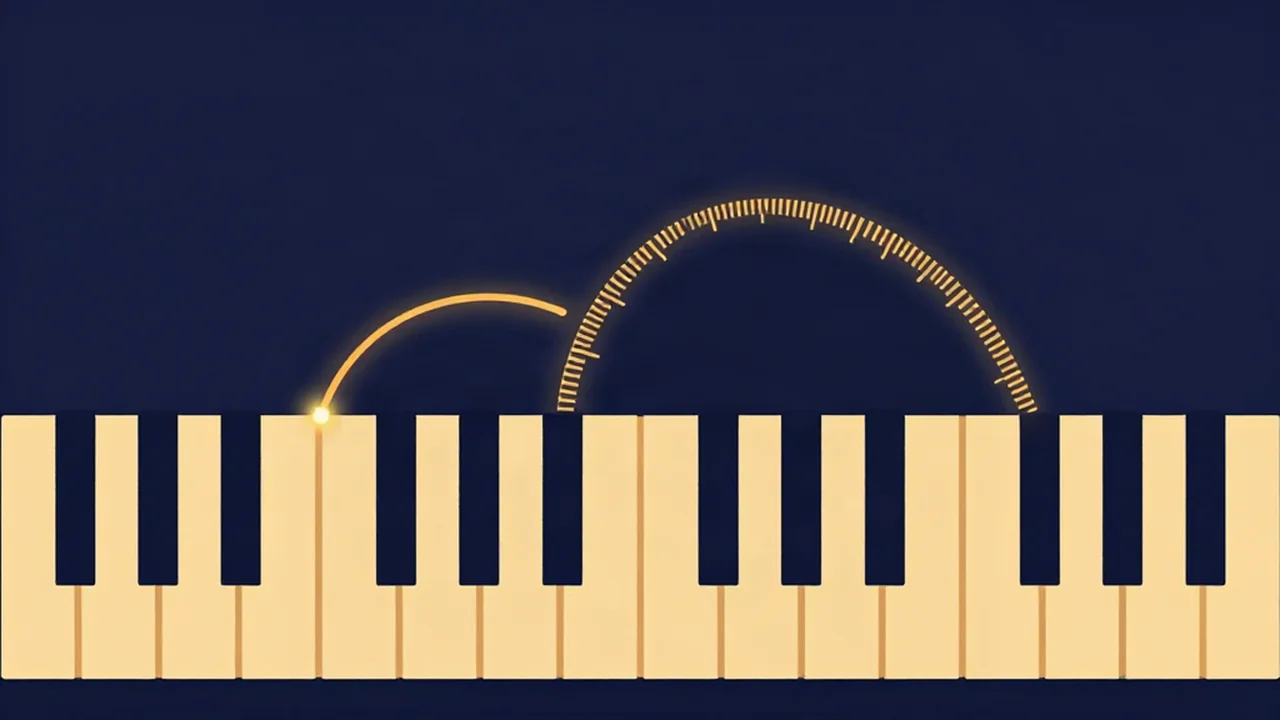
A semitone is the smallest step in Western music, and it's the unit a Pitch Changer uses to move a song up or down. A cent is one hundredth of a semitone. In standard equal temperament (the tuning system that splits the octave into equal steps), an octave has 12 semitones, so it has 1,200 cents.
Semitones are for big, musical moves, like shifting a song into a new key. Cents are for small corrections, like nudging a slightly sharp guitar back into tune. Any pitch changer is built on these two units, so it's worth knowing what they measure.
What a semitone is
On a piano, a semitone is the distance from one key to the very next one, black or white. C to C♯ is one semitone. C to D is two, which musicians also call a whole tone. Go up 12 semitones and you're back at C, one octave higher.
In equal temperament every semitone has the same frequency ratio:
ratio = 2^(n/12), where n is the number of semitones.
One semitone up gives a ratio of about 1.0595, so the frequency rises by roughly 5.9%. Twelve semitones gives 2^(12/12) = 2, which is why an octave doubles the frequency.
A worked example: A4 at 440 Hz
- +1 semitone: 440 × 1.0595 ≈ 466.16 Hz (A♯4)
- +12 semitones: 440 × 2 = 880 Hz (A5)
- −12 semitones: 440 ÷ 2 = 220 Hz (A3)
Positive numbers move pitch up and negative numbers move it down. That's the convention in every pitch changer, and it's the convention here too.
What a cent is
A cent splits each semitone into 100 equal steps on a logarithmic scale, so one cent is a frequency ratio of 2^(1/1200), or about 1.00058. That works out to roughly 0.06% per cent.
You'll see cents in three main places:
- Tuners. A needle that reads "+8" means the note is 8 cents sharp.
- Detuning. Synth players often detune a second oscillator by a few cents to get a thicker, chorused sound.
- Fine-tune controls. Samplers and DAWs let you offset a sample by cents so it matches a recording that isn't quite at A = 440.
How small a difference can you hear? It depends on the listener, the sound, and the pitch range. A figure you'll often see is about 5–10 cents for two tones played one after the other, with trained ears doing better and harder material doing worse. Take that as a ballpark, not a rule.
Why semitones matter for transposing
When you transpose a song you move every note by the same number of semitones, so the key moves with it. +2 semitones turns C major into D major. −3 semitones takes A minor down to F♯ minor. If key names are new to you, start with What Is Musical Key? A Key Finder Guide, then see What Are Key Signatures? A Key Finder Guide for how the sharps and flats shift.
To find the right number, first identify the song's current key with the Key Finder, then count the semitones to the key you want. If the result looks off, Wrong Key Detected? Fix Your Key Finder Results covers the usual causes. DJs use the same counting for mixing; Beatmatching and Key Matching Explained shows how.
Using an online pitch changer in semitones
Vocal Cut's Pitch Changer is an online pitch changer that works in whole semitones from −12 to +12. It has no cents or fine-tune control. If you need to correct a recording that's 20 cents flat, you'll need a DAW or another tool with fine-tune. The tool also has a separate speed slider from 0.5× to 2.0×. Before you export, read How Pitch, Speed, and Duration Relate to see how the two interact.
It works with MP3 or any other format your browser can decode. Processing runs in your browser, and your audio never leaves your device.
Vocals and karaoke
When shifting vocals, small moves sound most natural. A couple of semitones is usually safe, but bigger jumps start to sound obviously processed. How to Pitch Shift Without Ruining Vocals covers the limits. If you're singing along, the Karaoke Maker has its own key shift of −12 to +12 semitones that keeps the timing the same. How to Change a Karaoke Track's Key walks through it.
Frequently asked questions
How many cents are in a semitone?
There are 100 cents in a semitone and 1,200 cents in an octave. One cent equals a frequency ratio of 2^(1/1200), about 1.00058.
How much does one semitone change the frequency?
One semitone multiplies the frequency by 2^(1/12), about 1.0595, which is a rise of roughly 5.9%. A4 at 440 Hz becomes about 466.16 Hz one semitone up.
How many semitones do I shift to change key?
Count the semitones between the two keys. For example, C major to D major is +2 semitones, and going back down is −2. Every note moves by the same amount.
Can Vocal Cut's Pitch Changer adjust pitch in cents?
No. The Pitch Changer moves in whole semitones from −12 to +12. For fine-tune offsets measured in cents, use a DAW or a tool with a dedicated fine-tune control.
Can people hear a difference of a few cents?
Sometimes. A commonly cited range is about 5–10 cents for tones heard one after another, but it varies a lot with the listener, the instrument, and the context.